
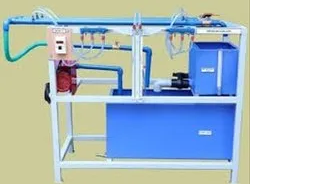
 Ramson Lab Equipment
healthcare settings, and industrial laboratories.
Key Products:
Laboratory Instruments: This includes microscopes, centrifuges, autoclaves, incubators, and other essential lab tools.
Analytical Equipment: Equipment such as spectrophotometers, pH meters, and balances, crucial for accurate analysis and research.
Glassware and Plasticware: High-quality beakers, test tubes, petri dishes, and other laboratory containers.
Safety Equipment: Fume hoods, eyewash stations, and other safety-related products designed to ensure a safe working environment in the lab.
Lab Furniture: Customized lab benches, storage cabinets, and workstations designed to optimize the functionality of laboratory spaces.
Market Served:
Educational Institutions: Supplies equipment to schools, colleges, and universities for their science laboratories.
Research Facilities: Provides advanced laboratory equipment for research and development purposes.
Healthcare Sector: Supplies diagnostic equipment to hospitals and clinics.
Industrial Laboratories: Offers specialized equipment for quality control, testing, and industrial research labs.
Quality Assurance:
Standards Compliance: Ramson Lab Equipment ensures that all products meet national and international quality standards, ensuring accuracy, reliability, and safety in laboratory operations.
Innovation: Focuses on continuous innovation, integrating the latest technologies into their equipment to meet the evolving needs of the scientific community.
Customer Support:
Technical Assistance: Provides robust technical support and guidance for the installation, operation, and maintenance of lab equipment.
Training: Offers training programs for users to maximize the utilization of their equipment.
After-Sales Service: Ensures efficient after-sales support, including repairs, replacements, and servicing of equipment.
Vision and Mission:
Vision: To be a leading provider of high-quality laboratory equipment globally, fostering innovation in science and technology.
Mission: To deliver reliable, innovative, and cost-effective laboratory solutions that empower scientific discovery and improve human health and safety.
Location:
Headquarters: The company is headquartered in a strategic location, making it accessible for distribution across various regions.
Certifications:
ISO Certification: Likely holds certifications such as ISO 9001 for quality management systems, ensuring consistent product quality.
Ramson Lab Equipment is recognized for its commitment to quality, innovation, and customer satisfaction, making it a trusted partner in the laboratory equipment industry.

Preview
Ground Floor, No. 131, 1st Cross, V.N Post, Srikara Building,,Chandrashekara Layout, S.Q Kaval, Kengeri Satellite Town,,
Bengaluru - 560091
Bengaluru - 560091
Contact Details

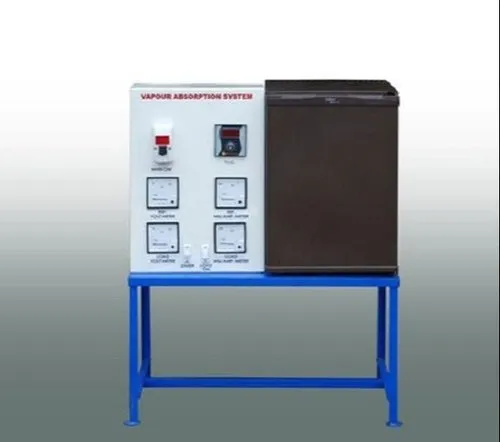
Vapour Absorption System
A Vapour Absorption System (VAS) is a type of refrigeration system that utilizes a heat source to drive the cooling process, unlike traditional vapor compression systems that rely on mechanical energy. VAS is widely used in applications where waste heat or thermal energy is available, such as in industrial processes or in combination with cogeneration systems. Here's an overview of how it works:
Principle of Operation:
The Vapour Absorption System operates on the principle of absorption and desorption of a refrigerant using a suitable absorbent. The system typically consists of four main components:
Generator:
The generator uses an external heat source (such as steam, hot water, or gas) to heat a solution of refrigerant and absorbent, typically ammonia-water or lithium bromide-water.
The heat causes the refrigerant (e.g., ammonia) to vaporize, separating it from the absorbent (e.g., water).
Condenser:
The refrigerant vapor flows into the condenser, where it releases its latent heat to the surroundings and condenses into a high-pressure liquid.
Evaporator:
The high-pressure liquid refrigerant then passes through an expansion valve, reducing its pressure and temperature.
In the evaporator, the low-pressure refrigerant absorbs heat from the environment (e.g., a room or a process), evaporating into a vapor and providing the cooling effect.
Absorber:
The refrigerant vapor returns to the absorber, where it mixes with the absorbent (from which it was initially separated in the generator).
The absorbent has a strong affinity for the refrigerant, so the refrigerant is absorbed back into the solution, releasing heat in the process.
This solution is then pumped back to the generator, completing the cycle.
Bengaluru - Karnataka