
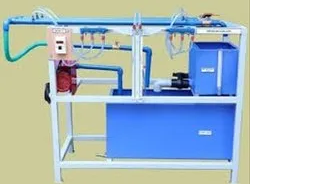
 Ramson Lab Equipment
healthcare settings, and industrial laboratories.
Key Products:
Laboratory Instruments: This includes microscopes, centrifuges, autoclaves, incubators, and other essential lab tools.
Analytical Equipment: Equipment such as spectrophotometers, pH meters, and balances, crucial for accurate analysis and research.
Glassware and Plasticware: High-quality beakers, test tubes, petri dishes, and other laboratory containers.
Safety Equipment: Fume hoods, eyewash stations, and other safety-related products designed to ensure a safe working environment in the lab.
Lab Furniture: Customized lab benches, storage cabinets, and workstations designed to optimize the functionality of laboratory spaces.
Market Served:
Educational Institutions: Supplies equipment to schools, colleges, and universities for their science laboratories.
Research Facilities: Provides advanced laboratory equipment for research and development purposes.
Healthcare Sector: Supplies diagnostic equipment to hospitals and clinics.
Industrial Laboratories: Offers specialized equipment for quality control, testing, and industrial research labs.
Quality Assurance:
Standards Compliance: Ramson Lab Equipment ensures that all products meet national and international quality standards, ensuring accuracy, reliability, and safety in laboratory operations.
Innovation: Focuses on continuous innovation, integrating the latest technologies into their equipment to meet the evolving needs of the scientific community.
Customer Support:
Technical Assistance: Provides robust technical support and guidance for the installation, operation, and maintenance of lab equipment.
Training: Offers training programs for users to maximize the utilization of their equipment.
After-Sales Service: Ensures efficient after-sales support, including repairs, replacements, and servicing of equipment.
Vision and Mission:
Vision: To be a leading provider of high-quality laboratory equipment globally, fostering innovation in science and technology.
Mission: To deliver reliable, innovative, and cost-effective laboratory solutions that empower scientific discovery and improve human health and safety.
Location:
Headquarters: The company is headquartered in a strategic location, making it accessible for distribution across various regions.
Certifications:
ISO Certification: Likely holds certifications such as ISO 9001 for quality management systems, ensuring consistent product quality.
Ramson Lab Equipment is recognized for its commitment to quality, innovation, and customer satisfaction, making it a trusted partner in the laboratory equipment industry.

Preview
Ground Floor, No. 131, 1st Cross, V.N Post, Srikara Building,,Chandrashekara Layout, S.Q Kaval, Kengeri Satellite Town,,
Bengaluru - 560091
Bengaluru - 560091
Contact Details

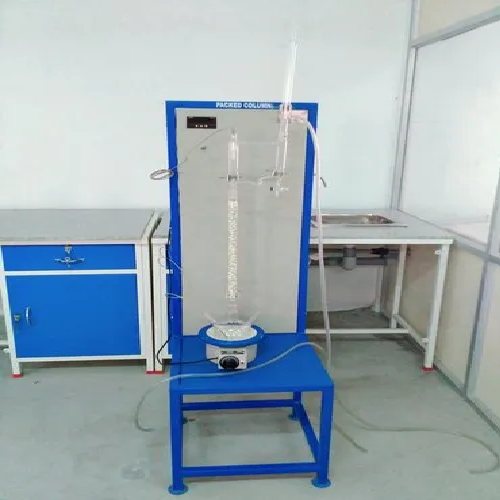
Process Control Lab Equipment
Process Control Lab Equipment is used to simulate and study various control processes in engineering, particularly in chemical, mechanical, and electrical engineering fields. This equipment helps students and professionals understand the principles of controlling industrial processes, including maintaining desired levels of temperature, pressure, flow, and other variables within a system.
Key Components of Process Control Lab Equipment:
Control Trainer Kits:
Single-Loop Control Systems: These trainers simulate simple control systems, such as temperature or pressure control in a single loop, helping users understand basic PID (Proportional-Integral-Derivative) control.
Multi-Loop Control Systems: More advanced trainers simulate complex systems with multiple interacting control loops, allowing for the study of cascade, ratio, and feedforward control strategies.
Sensors and Transducers:
Temperature Sensors (RTDs, Thermocouples): Measure the temperature in a system, providing feedback to the control system.
Pressure Sensors: Measure the pressure in a vessel or pipeline, essential for maintaining safe and efficient operations.
Flow Meters: Measure the flow rate of liquids or gases, crucial for processes where precise flow control is required.
Level Sensors: Monitor the level of liquid in a tank or reservoir.
Actuators:
Control Valves: Used to regulate the flow of fluids by varying the size of the flow passage, often controlled electronically or pneumatically.
Pumps: Control the flow of liquids in a system, often integrated with speed control for precise flow management.
Heaters/Coolers: Manage the temperature within a process by providing or removing heat as needed.
Control Units:
PID Controllers: Implement PID control algorithms to maintain process variables at desired set points by adjusting actuators based on sensor feedback.
Programmable Logic Controllers (PLCs): Used for automating control processes, allowing for complex sequences of operations, interlocks, and safety shutdowns.
Human-Machine Interfaces (HMIs): Provide an interface for users to monitor and interact with the control system, adjusting set points, and viewing system status.
Process Simulators:
Dynamic Process Simulators: These allow the simulation of various industrial processes, helping users understand how control systems respond to changes in process variables in real-time.
Mathematical Models: Software that allows for the creation and testing of process control models, useful for designing control strategies before implementing them on physical systems.
Data Acquisition Systems:
DAQ Modules: Collect data from various sensors in the system, providing real-time feedback and logging for analysis.
Software Interfaces: Used for data visualization, logging, and analysis, often integrated with the control system for real-time monitORING.
Bengaluru - Karnataka