
 Bhagyavati Health Care Equipments Mfg Co
Established in year 1990, Bhagyavati Health Care Equipments Mfg Co involved in the area of Manufacturer and Wholesaler of Laboratory Equipment, Human Anatomical Models etc. In their development process, we assure that only top notch material is used by our professionals along with ultra-modern tools and machinery. Besides this, we check these on a variety of grounds before finally shipping them at the destination of our customers.
Working under the mentorship of Mr. Sanjeev Kumar, we have acquired a reputed stature in the industry

Preview
No. 2, Vivekananda Road,,Jigani industrial area, Jigani,,
Bengaluru - 560105
Bengaluru - 560105
Contact Details

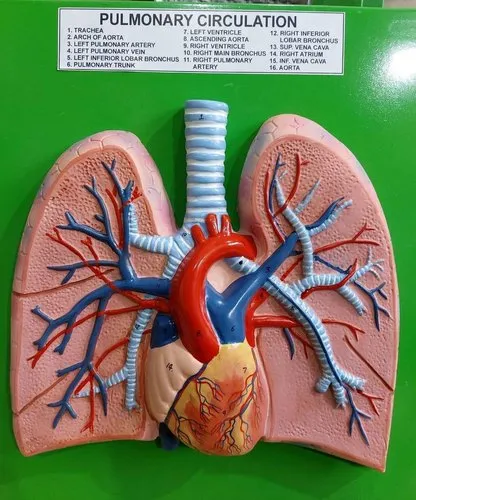
Physiology Pulmonary Circulation Model
The Physiology Pulmonary Circulation Model is a conceptual or physical representation used to understand and study the flow of blood through the lungs, which is a critical component of the cardiovascular system. Here's an overview of what this model typically includes:
Key Components of the Pulmonary Circulation Model:
Right Ventricle:
The right ventricle of the heart pumps deoxygenated blood into the pulmonary arteries.
Pulmonary Arteries:
These arteries carry deoxygenated blood from the right ventricle to the lungs. Unlike systemic arteries, pulmonary arteries carry blood that is low in oxygen.
Lungs:
In the lungs, blood flows through capillaries where gas exchange occurs. Oxygen from the air within the alveoli (air sacs) diffuses into the blood, and carbon dioxide diffuses out of the blood into the alveoli to be exhaled.
Pulmonary Veins:
These veins carry oxygenated blood from the lungs back to the left atrium of the heart. Unlike systemic veins, pulmonary veins carry oxygen-rich blood.
Left Atrium:
The oxygenated blood collected in the left atrium is then pumped into the left ventricle, which distributes it to the rest of the body through systemic circulation.
Functions of Pulmonary Circulation:
Gas Exchange: The primary function is the exchange of gases, where carbon dioxide is removed from the blood, and oxygen is absorbed.
Regulation of Blood pH: Helps maintain the acid-base balance of the body by removing carbon dioxide.
Filtration: The lungs can act as a filter to remove small blood clots from the bloodstream before they can reach vital organs.
Application of the Model:
Educational Tool: Used in medical education to help students and professionals understand the dynamics of pulmonary circulation.
Clinical Simulation: Helps in simulating and understanding diseases like pulmonary hypertension, pulmonary embolism, and other conditions affecting the pulmonary circuit.
Research: Utilized in physiological research to study how changes in pulmonary circulation can affect overall cardiovascular health.
This model is essential for those studying cardiovascular and respiratory physiology, providing a detailed understanding of how blood flows through the lungs and its importance in maintaining overall health.
Bengaluru - Karnataka